
Food testing
Name
Published by
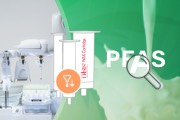

This basic method provides the core methodology for translating a workflow into OneLab-executable script(s) as an attempt to fully or semi-automate a specific procedure. It demonstrates the benefits of automation and highlights OneLab capabilities and best practices to promote solution adoption, helping transition from manual to a more automated approach. It can be used alone or serves as a building block for a more complex workflow and is easily adaptable to users' requirements.
The European Food Safety Authority (EFSA) predicts that PFAS exposure is primarily through food. Milk, being the staple food product for toddlers and children, would affect them disproportionately compared to adults, so there is a need to monitor PFAS levels in milk.
In addition to using Andrew+ and Extraction+ for improved throughput and reduced errors, this method uses Oasis WAX SPE cartridges to enhance PFAS recovery and reduce matrix interferences for LC-MS/MS analysis. Automation also allowed for washing the walls of the sample vials with eluent, increasing the recovery of PFAS.
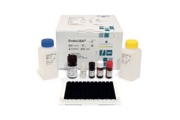

This example method provides a freely adjustable framework for measuring the adaptability of the OneLab environment to workflows from different application fields. It helps to understand various nuances of the code-free, universal protocol designer and provides general indications as to the feasibility of a project. Scripts generally require fine adjustment to correct for variables and support specific labware implementation.
Adequate endotoxin testing is invaluable in ensuring quality and safety. LAL assays require cumbersome sample preparation and are easily disturbed by different constituents of the sample.
EndoLISA, combining solid-phase format and synthetic rFC, achieves sensitive detection of endotoxin by eliminating interfering components. It can be automated, which accelerates the test with minimal human error.
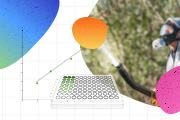
This basic method provides the core methodology for translating a workflow into OneLab-executable script(s) as an attempt to fully or semi-automate a specific procedure. It demonstrates the benefits of automation and highlights OneLab capabilities and best practices to promote solution adoption, helping transition from manual to a more automated approach. It can be used alone or serves as a building block for a more complex workflow and is easily adaptable to users' requirements.
Pesticide analysis is critical to ensure agricultural commodities comply with legal limits. Matrix effects are a common concern, as they can compromise detection and quantification quality.
Here, we present a fully automated protocol for matrix-matched standard curve preparation ready for a typical LC-MS/MS method.
