
Diagnostics
Name
Published by

This basic method provides the core methodology for translating a workflow into OneLab-executable script(s) as an attempt to fully or semi-automate a specific procedure. It demonstrates the benefits of automation and highlights OneLab capabilities and best practices to promote solution adoption, helping transition from manual to a more automated approach. It can be used alone or serves as a building block for a more complex workflow and is easily adaptable to users' requirements.
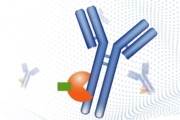
Antibody purification is routinely performed in biopharmaceutical research. Here, we present a rapid automated Protein A-based antibody purification method using magnetic beads. The robust protocol ensures high antibody recovery.
The automation capabilities of the Andrew+ Pipetting Robot allow for the flexibility of processing samples up to 48 samples depending on throughput needs.

This example method provides a freely adjustable framework for measuring the adaptability of the OneLab environment to workflows from different application fields. It helps to understand various nuances of the code-free, universal protocol designer and provides general indications as to the feasibility of a project. Scripts generally require fine adjustment to correct for variables and support specific labware implementation.
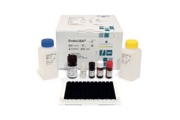
Adequate endotoxin testing is invaluable in ensuring quality and safety. LAL assays require cumbersome sample preparation and are easily disturbed by different constituents of the sample.
EndoLISA, combining solid-phase format and synthetic rFC, achieves sensitive detection of endotoxin by eliminating interfering components. It can be automated, which accelerates the test with minimal human error.
This advanced method offers an end-to-end solution developed around an advanced application, a specialized kit, or an analytical system. It delivers complete functional, ready-to-use protocols that are qualitatively and quantitatively assessed for consistency, executability, and repeatability, usually without needing to make any changes. It operates per batch size and is scalable to accommodate changing requirements.
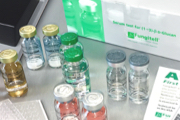
The Fungitell® chromogenic assay is used to detect (1→3)-β-D-Glucan, a biomarker for invasive fungal disease. The Limulus Amebocyte Lysate (LAL) based assay requires a complex plate building process with numerous sample handling and pipetting steps including standard curve preparation, control testing, in-plate sample pretreatment, and reagent dispensing.
These time consuming and tedious steps can be accomplished using an Andrew+ robot.

This basic method provides the core methodology for translating a workflow into OneLab-executable script(s) as an attempt to fully or semi-automate a specific procedure. It demonstrates the benefits of automation and highlights OneLab capabilities and best practices to promote solution adoption, helping transition from manual to a more automated approach. It can be used alone or serves as a building block for a more complex workflow and is easily adaptable to users' requirements.
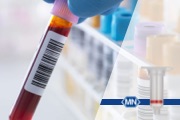
Isolation of nucleic acids from various sample materials is the basis for a large variety of downstream analysis in the field of research, applied science, and diagnostics.
MACHEREY-NAGEL provides a diverse set of optimized solutions for nucleic acid isolation including genomic DNA isolation from human specimens, such as whole blood, serum, plasma, or other body fluids.
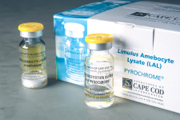
This advanced method offers an end-to-end solution developed around an advanced application, a specialized kit, or an analytical system. It delivers complete functional, ready-to-use protocols that are qualitatively and quantitatively assessed for consistency, executability, and repeatability, usually without needing to make any changes. It operates per batch size and is scalable to accommodate changing requirements.
Endotoxin testing is a requirement for any injectable drug or medical device to ensure safety. Pyrochrome® is a 96 well microplate based chromogenic Limulus Amebocyte Lysate (LAL) assay that requires a complex plate building process with numerous pipetting steps.
Standard curve and positive product control (PPC) preparation, sample arraying, and reagent dispensing are time consuming and tedious steps that can be accomplished using an Andrew+ robot.
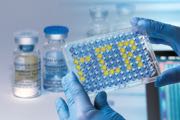
PyroSmart NextGen® Recombinant Cascade Reagent (rCR) for Endotoxin Detection

Associates of Cape Cod, Inc.
This advanced method offers an end-to-end solution developed around an advanced application, a specialized kit, or an analytical system. It delivers complete functional, ready-to-use protocols that are qualitatively and quantitatively assessed for consistency, executability, and repeatability, usually without needing to make any changes. It operates per batch size and is scalable to accommodate changing requirements.
Endotoxin testing is a requirement for any injectable drug or medical device to ensure safety. PyroSmart NextGen® is a 96 well microplate based chromogenic that utilizes recombinant proteins as key inputs.
The assay requires a complex plate-building process with numerous pipetting steps. Standard curve and positive product control (PPC) preparation, sample arraying, and reagent dispensing are time-consuming and tedious steps that can be accomplished using an Andrew+ robot.
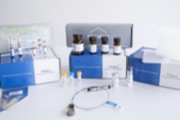
This advanced method offers an end-to-end solution developed around an advanced application, a specialized kit, or an analytical system. It delivers complete functional, ready-to-use protocols that are qualitatively and quantitatively assessed for consistency, executability, and repeatability, usually without needing to make any changes. It operates per batch size and is scalable to accommodate changing requirements.
Peptide analysis can be a demanding process especially with the increased need for a greater understanding of SARS-CoV-2 infection.
Waters SARS-CoV-2 LC-MS kit enables precise and reproducible preparation of three SARS-CoV-2 peptides from the NCAP protein using the Andrew+ pipetting robot.
